

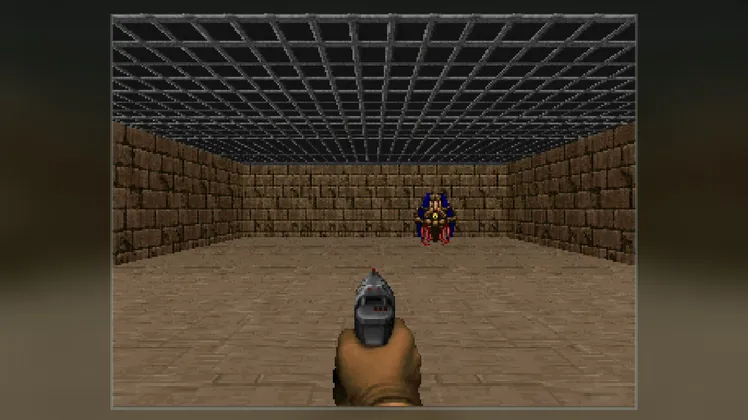
QoE-BugHunter (VizDoom)
/ 3 min read
Table of Contents
Role
Developer - Agentic QA and AI Systems
Project Summary
This project is a research-focused prototype for QoE-driven automated bug discovery in 3D game environments using VizDoom. I designed and implemented a multi-agent pipeline that does more than simple log checking: it actively probes the environment, verifies whether anomalies are reproducible, and then generates structured bug reports ranked by user impact (QoE severity).
The core objective was to build a reproducible system that can help bridge the gap between raw runtime anomalies and triage-ready, research-usable bug intelligence.
Repository
Research Goal
The project evaluates how an agentic system can identify and prioritize game-breaking or experience-degrading issues by combining:
- active environment exploration,
- deterministic replay for verification,
- and weighted QoE scoring for severity ranking.
Instead of only asking “did the run fail?”, the system asks “how bad is this for player experience, and how reproducible is it?”
System Architecture
The workflow is built around three cooperating agents:
- Explorer: probes scenarios (seed sweep + random episodes), collects candidate issues, and stores minimal run context.
- Inspector: replays candidate conditions and verifies whether each issue is reproducible above threshold.
- Reporter: composes markdown/json bug reports with reproducibility statistics and QoE severity labels.
Current Detection Strategy
The current discovery phase is intentionally rule-based random exploration (not RL):
- deterministic seed sweeps,
- random action probing,
- anomaly checks on frame repetition, reset/step exceptions, and reward numeric anomalies.
This gives a clear baseline for controlled research comparisons before introducing learning-based exploration policies.
Detection Logic Implemented
The pipeline detects and classifies multiple anomaly categories:
SEED_NON_DETERMINISMSTALL_NO_PROGRESSRESET_EXCEPTIONSTEP_EXCEPTIONREWARD_NUMERIC_ANOMALY
Two important verification paths were implemented:
- Reset/dependency failure path for runtime setup issues.
- In-game stall path for gameplay anomalies, including screenshot capture at the anomaly point.
QoE Severity Model
Each verified issue is scored on a 0-100 QoE scale using weighted dimensions:
- frustration: 35%
- fairness: 25%
- immersion disruption: 20%
- usability/comfort: 20%
Severity mapping:
- Critical: 80+
- High: 60-79
- Medium: 35-59
- Low: 0-34
A reproducibility penalty is included so unstable one-off anomalies are ranked lower than repeatable issues.
Example Evidence (In-Game Stall Run)
Reference screenshot used in the repository README:
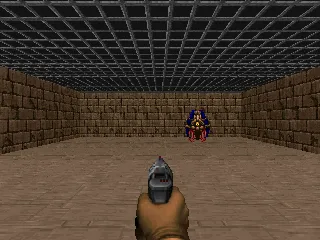
The run pipeline generated screenshot evidence directly from anomaly moments:
In the reference stall run, all discovered candidates were verified, and reports were automatically generated with a High QoE severity classification for the confirmed pattern.
Generated Outputs
For each run, the system produces:
- candidate and verified issue sets,
- per-issue evidence JSON,
- captured screenshots,
- markdown + JSON bug reports,
- run-level metrics including:
- confirmed unique bugs/hour,
- average reproducibility rate,
- evidence quality score.
Key Outcomes
- Built a complete end-to-end agentic bug discovery pipeline, not just a detector.
- Added reproducibility-aware verification to reduce noisy false positives.
- Converted technical anomalies into structured, triage-ready bug reports.
- Established a practical baseline for PhD-aligned QoE-driven bug research in interactive 3D environments.
Skills
- AI Systems
- Agentic Workflows
- Bug Discovery Automation
- Quality of Experience (QoE) Modeling
- Reproducibility Testing
- Python
- Robotics/Game Environment Integration